

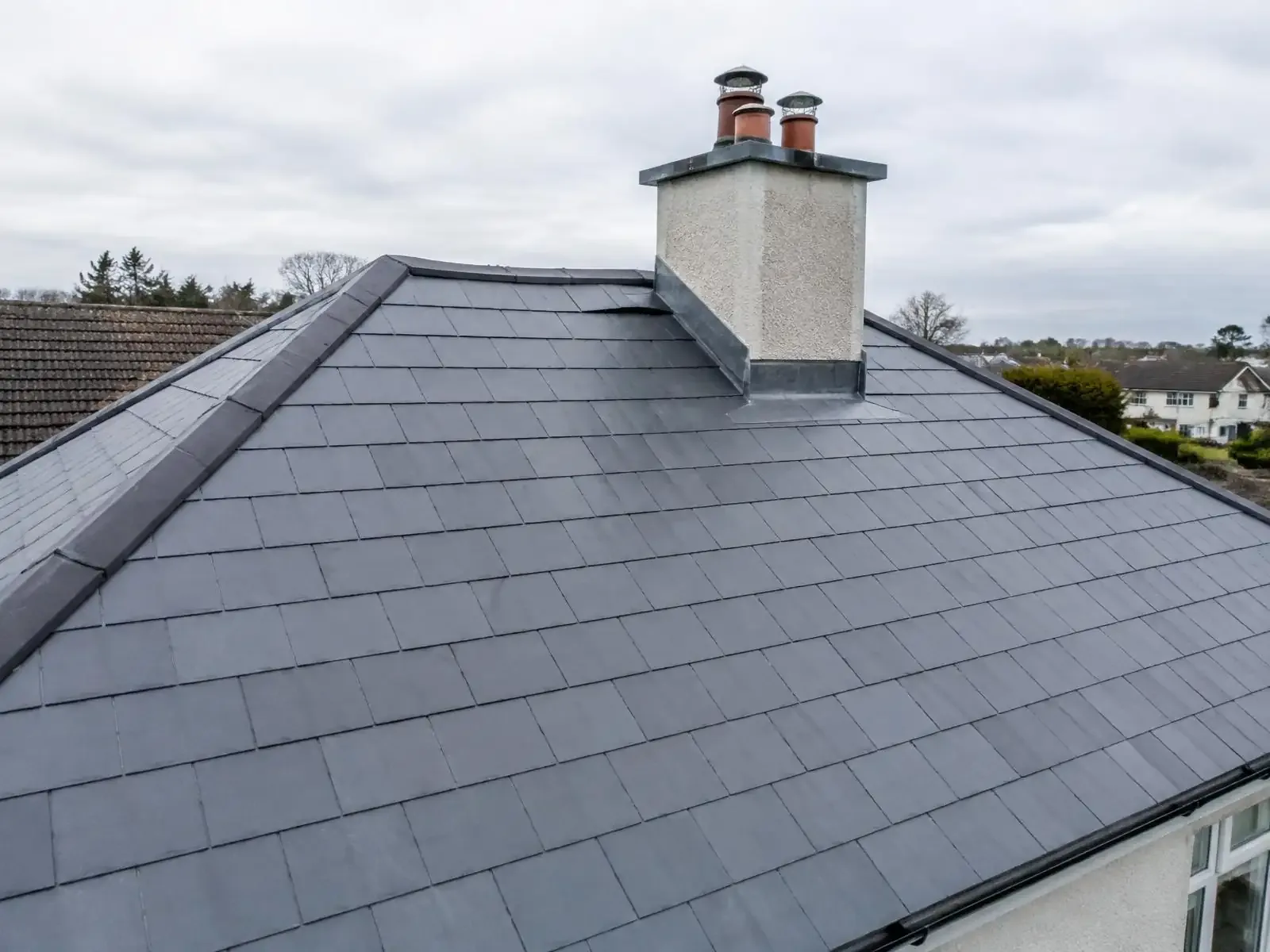
Here’s the call we get most often: “There’s a stain on the bedroom ceiling, so there must be a hole in the roof above it.” Sometimes there is. More often the water got in somewhere else entirely, and the stain just marks the point where it finally gave up and dropped.
Water travels before it drops
A pitched roof is a stack of layers: slates or tiles, then felt or membrane, then battens and rafters. When water gets past the outer covering it lands on the felt and runs downhill along it. It can run along a batten, soak into a rafter, follow a nail and travel several metres before it finds a tear or a lap in the felt and comes through. On a flat roof it does the same thing inside the deck.
So the stain tells us where the water left the roof structure. It doesn’t tell us where it got in.
Why patching above the stain fails
A roofer who seals the slates directly above a ceiling stain is guessing. If the real entry point is the chimney flashing two metres up the slope, the patch does nothing, the leak comes back with the next storm, and you’ve paid for a repair that was never going to work. We see this on roofs where two or three people have already “fixed” the same leak.
Where leaks usually start
- Damaged, slipped or missing slates and tiles
- Failed or lifted flashing at chimneys, walls and abutments
- Blocked valleys or opened laps in the valley lining
- The junction between the chimney and the roof covering
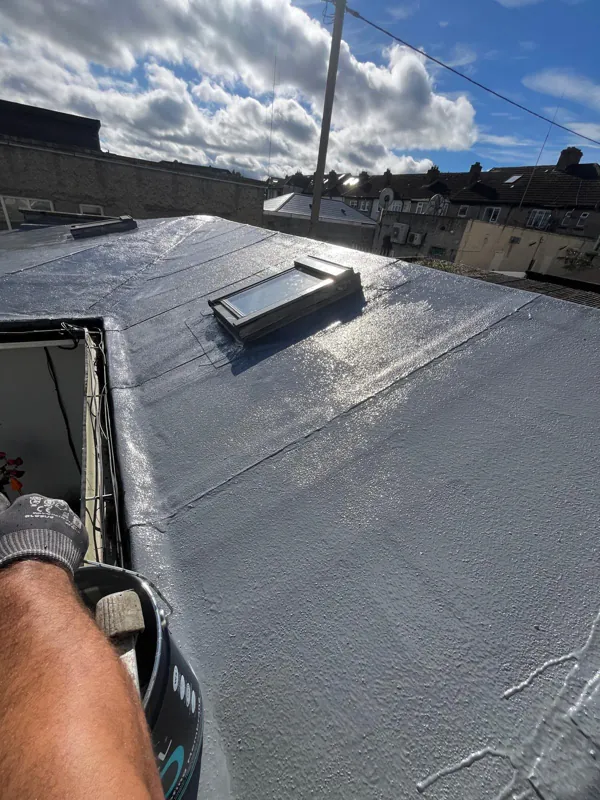
- Splits, blisters or failed upstands on flat roofs
- Storm damage that has exposed part of the roof
- Perished seals around vents, pipes and roof windows
How we find the real way in
- Start in the attic. Water leaves marks on the underside of the felt and on the timbers. We follow those marks uphill to the point where they start.
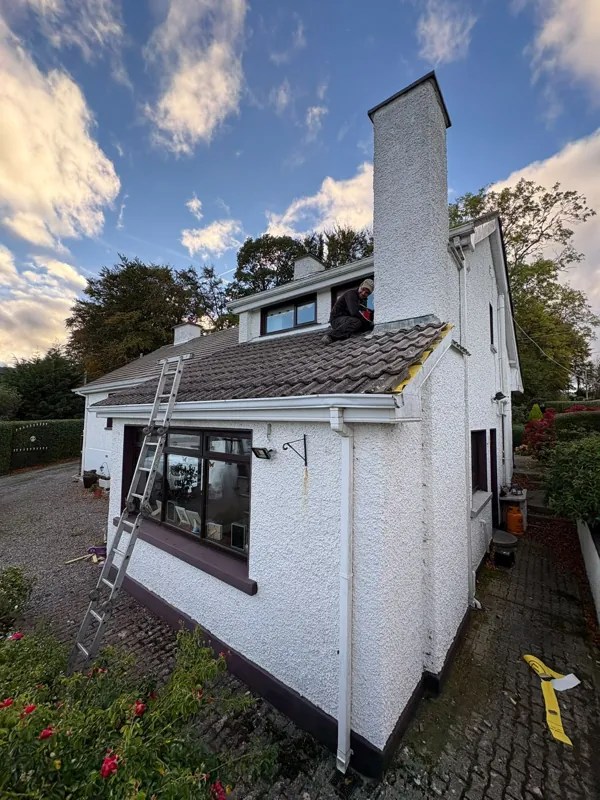
- Check the likely entry points on the roof itself: the chimney, the flashings, the valleys, anything that penetrates the covering. We check these rather than assuming the cause from the ceiling.
- Repair or renew the failed detail properly, instead of sealing over it with mastic or a patch that will fail in a year.
- Rule out everything else. If the attic is dry and the “leak” only appears in cold weather, it may be condensation. If it’s near a bathroom, it may be plumbing. We’ll tell you either way rather than sell you a roof repair.
If you’ve got a stain that keeps coming back no matter who has looked at it, send us a photo. We’ll start the investigation from the roof and the attic, not from the last person’s repair.
Roof leaking? Let’s get it sorted.
Send us a few photos and we’ll give you a price. Free quote, no pressure. Emergency call-outs 24/7.